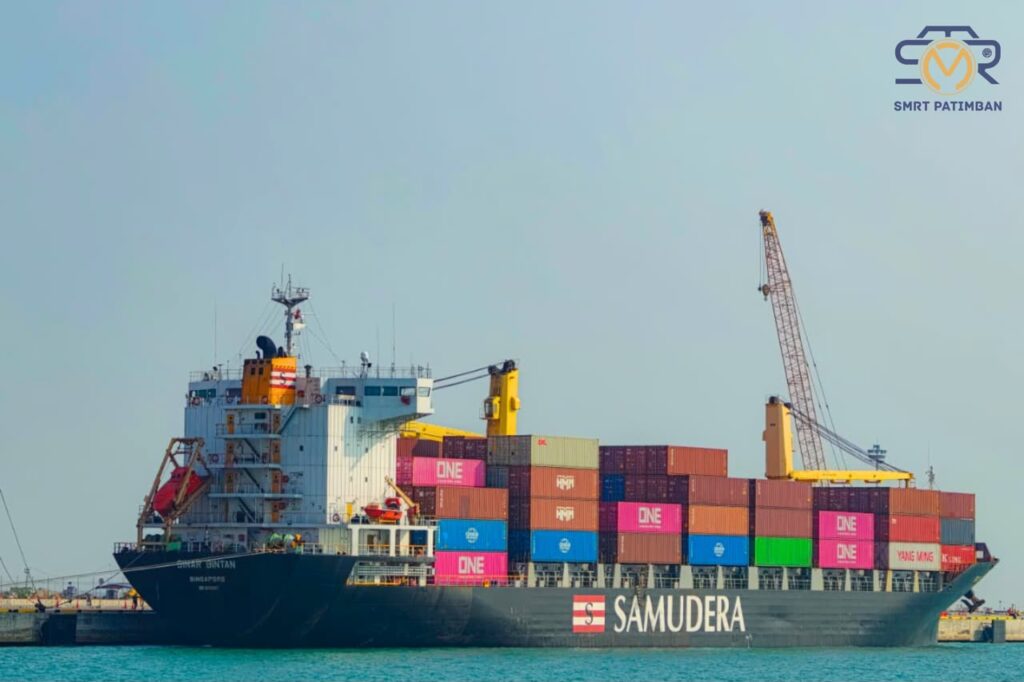
Jakarta, 15 July 2026 — The arrival of the Mediterranean Shipping Company (MSC) Aria III, a container vessel measuring more than 200 meters in length, at Patimban Container Terminal in Subang, West Java, marks the beginning of a new phase in the development of Indonesia’s national logistics ecosystem, one that is increasingly integrated into global trade networks. The vessel, arriving from Singapore before continuing its voyage to Laem Chabang (Thailand) and three major ports in China—Shekou, Ningbo, and Shanghai—represents the inaugural international container shipping service at Patimban Port.
Amid the accelerating relocation of investments to strategic partner countries, production reshoring closer to end markets, and the diversification of global supply chains, efficient and well-connected ports have become critical to attracting investment, strengthening international trade, and enhancing national competitiveness. According to the United Nations Conference on Trade and Development (UNCTAD), approximately 80% of global trade by volume is transported by sea, making port efficiency one of the key determinants of a country’s competitiveness. This underscores the strategic importance of Patimban Port for Indonesia’s logistics sector.
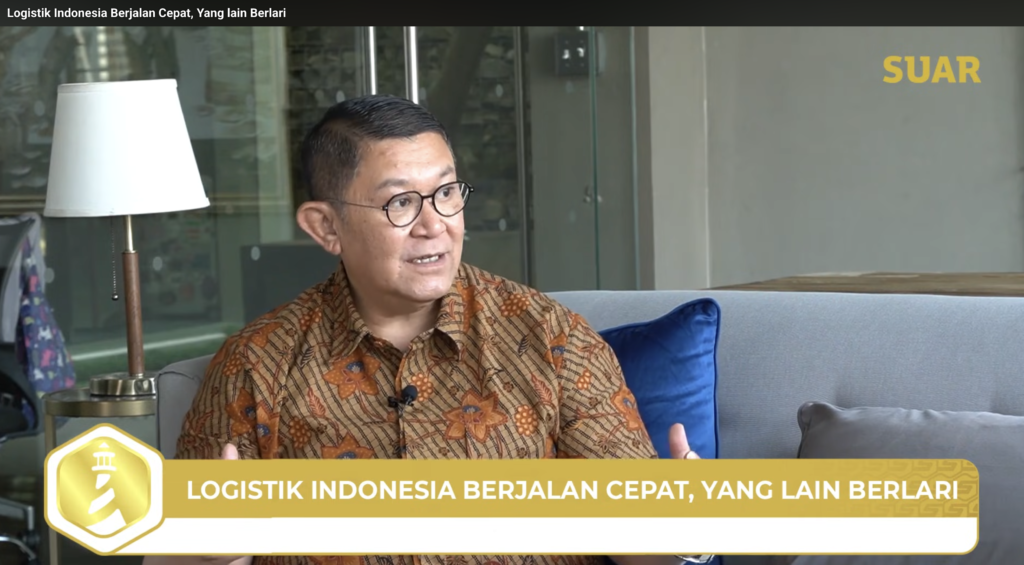
Senior Vice President of the International Federation of Freight Forwarders Associations (FIATA) and Commissioner of PT Pelabuhan Patimban Internasional (PPI), Yukki Nugrahawan Hanafi, stated that the launch of MSC’s regular international container service at Patimban is more than just the addition of another shipping route—it signifies the emergence of a new logistics ecosystem that will shape Indonesia’s competitiveness in global trade.
“As the world’s largest archipelagic nation, Indonesia needs more than just large ports. We require an integrated port network capable of efficiently facilitating international trade while strengthening national supply chain resilience amid geopolitical dynamics and global disruptions. We hope MSC’s successful service will serve as a catalyst for more international shipping lines to establish operations in Patimban, creating a broader network connecting Asia, the Middle East, Europe, and the Americas,” said Yukki.
Currently, Patimban Container Terminal occupies 10 hectares with an annual handling capacity of 250,000 TEUs. PT Patimban Global Gateway Terminal (PGT), the terminal operator, is expanding its capacity to 1.65 million TEUs annually. Under its long-term master plan, Patimban is designed to accommodate 7.5 million TEUs of container traffic and 600,000 vehicles annually at its automotive terminal, making it one of Indonesia’s largest integrated port developments.
Capacity expansion is being implemented in phases. Operations commenced in January 2026 with one Mobile Harbour Crane (MHC), followed by two additional MHCs in April 2026. By December 2026, three Ship-to-Shore (STS) cranes and nine Electric Rubber-Tyred Gantry (E-RTG) cranes are scheduled for installation. This complements the deployment of nine RTGs, three STS cranes, four reach stackers, and sixteen terminal trucks planned for September 2026. Once fully operational, the terminal’s handling capacity is projected to increase from approximately 250,000 TEUs to 800,000 TEUs annually.
Growing Capacity and Connectivity
“These equipment investments will not only expand terminal capacity but also improve operational productivity through higher box moves per hour, shorter vessel turnaround times, and greater schedule reliability,” added Yukki, who also serves as Chairman of the Advisory Board of the Indonesian Logistics and Freight Forwarders Association (ALFI).
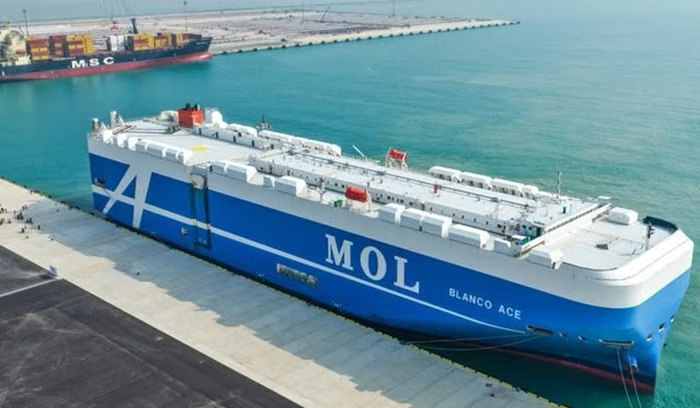
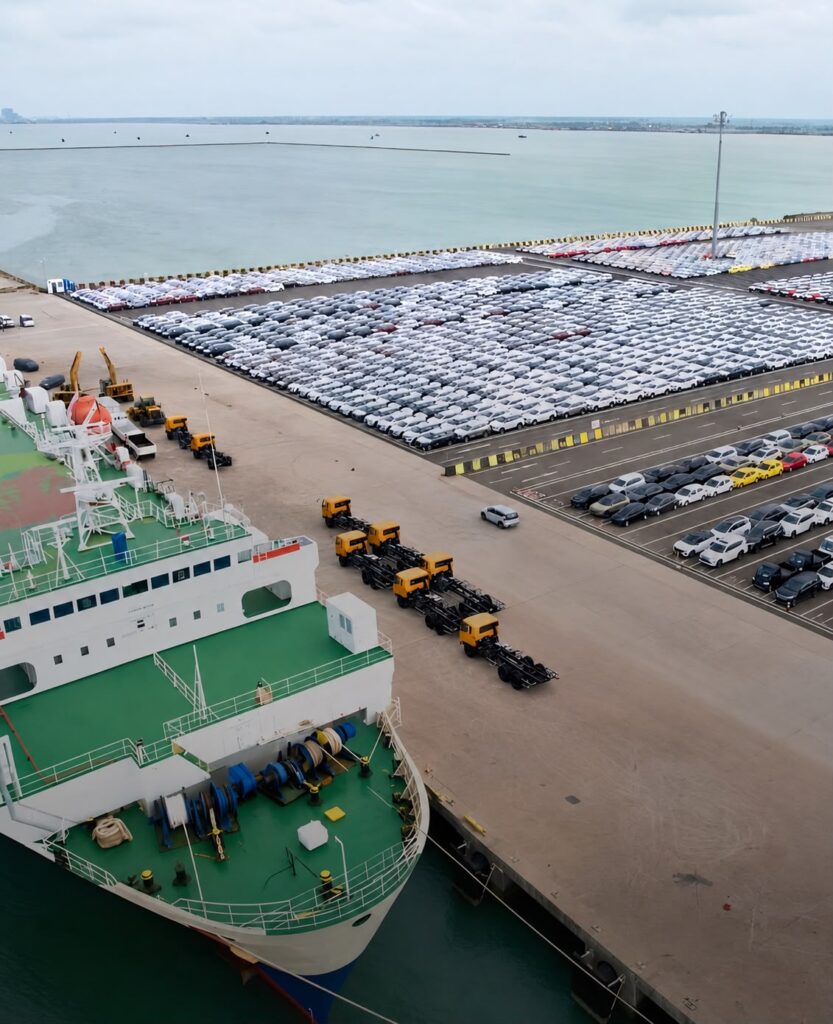
Beyond its container terminal, Patimban has operated its automotive terminal since 2022 on a 22.4-hectare site with an annual capacity of 218,000 Completely Built-Up (CBU) vehicles for both exports and imports. According to PT Patimban International Car Terminal (PICT), the facility handled 204,774 CBU vehicles in 2025, the majority destined for export markets, while 13,381 units were imported and 65,688 units were distributed domestically.
As of June 2026, Patimban had facilitated exports of 63,086 vehicles and imports of 7,262 vehicles, surpassing domestic shipment volumes through Belawan and Batam ports, which totaled 37,110 units. In addition, the deepening of the port’s berth to minus 14 meters Low Water Spring (LWS) has increased vessel capacity from approximately 4,000 vehicles to between 5,000 and 6,000 vehicles per call.
Land connectivity also remains a strategic priority in supporting Patimban’s ambition to become a world-class port. A 37-kilometre toll road linking the Cikopo–Palimanan Toll Road directly to Patimban is being completed in phases through the end of 2026, with partial connectivity expected in 2027. The new route will reduce travel time from industrial estates in East Karawang and the northern West Java corridor from 1.5–2 hours to just 30–40 minutes.
Patimban Vision 2036
Yukki emphasized that Patimban’s success should not be viewed solely as the success of a port, but as Indonesia’s achievement in building a new foundation for international trade, industrial competitiveness, and national supply chain resilience.
“Within the framework of the Patimban Vision 2036, the arrival of MSC represents Phase One. Phase Two focuses on developing world-class infrastructure and equipment, while Phase Three is about building cargo volumes and expanding global shipping networks. When these three phases progress together, Patimban will be well positioned to become Indonesia’s Integrated Container and Automotive Gateway, strengthening national supply chain resilience.”
He added that this vision can only be realized through five strategic pillars: Collaboration, Connectivity, Competitiveness, Sustainability, and Supply Chain Resilience. Achieving these goals requires close cooperation among government agencies, port operators, international shipping lines, freight forwarders, manufacturers, customs authorities, academia, investors, and logistics associations.
“With the support of all stakeholders, I am confident Patimban will emerge as one of Asia’s most strategic ports and become a lasting legacy for Indonesia’s economic development over the coming decades,” Yukki concluded.
The original article can be accessed here