JAKARTA, August 5, 2026 — The blue economy paradigm is no longer viewed merely as an environmental agenda, but rather as a national development strategy to strengthen logistics competitiveness, improve supply chain efficiency, and reinforce Indonesia’s position as a maritime nation in the Indo-Pacific region. The Chartered Institute of Logistics and Transport (CILT) considers the blue economy paradigm to be the most realistic pathway to translate Indonesia’s geographic advantages into a sustainable driver of economic growth.
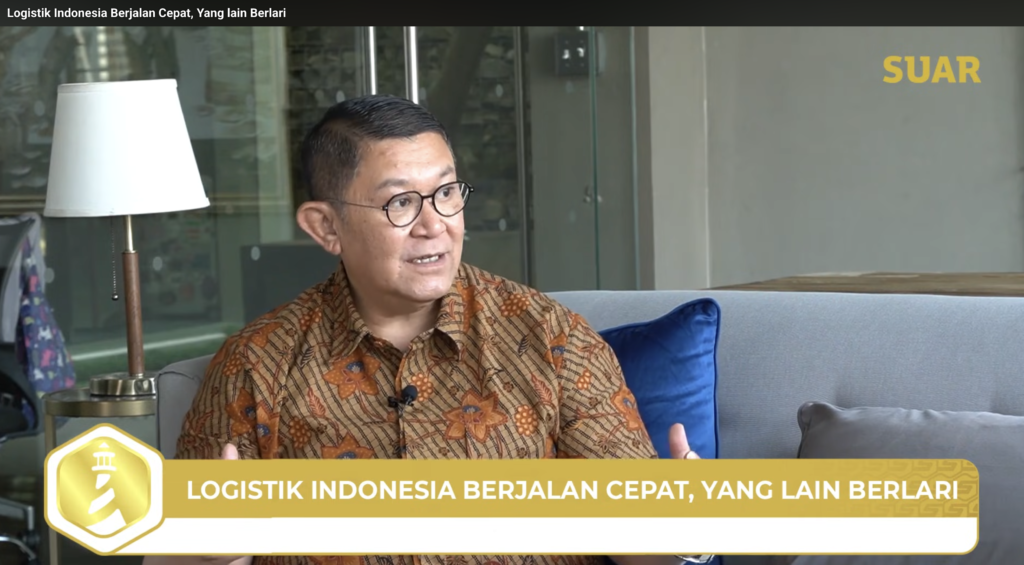
CILT Indonesia Advisory Board Member and FIATA Senior Vice President, Yukki Nugrahawan Hanafi, said that the blue economy paradigm could contribute to driving higher-quality economic growth. “As an archipelagic country with more than 17,000 islands and the second-longest coastline in the world, Indonesia possesses geographic advantages that serve as important capital in building a competitive logistics and trade ecosystem. This potential needs to be optimized through development that is capable of balancing economic growth with environmental sustainability.”
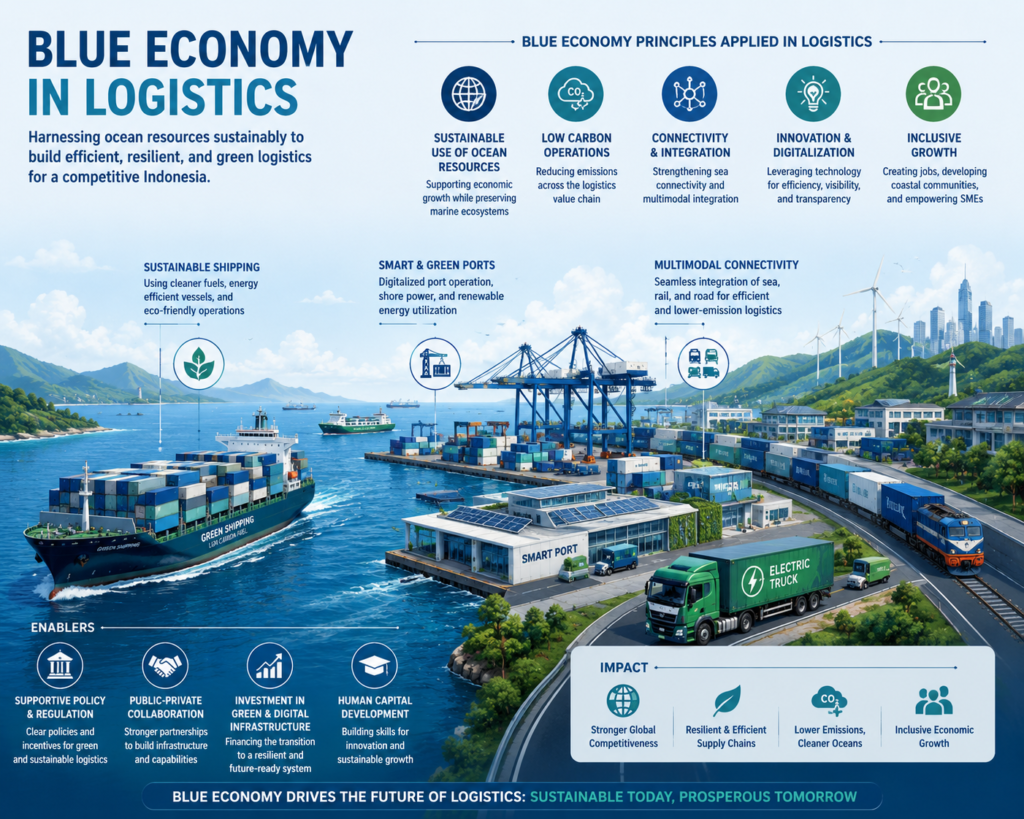
Furthermore, Yukki said that the blue economy paradigm should be viewed as a long-term strategy to transform Indonesia’s logistics and maritime sectors. “The Blue Economy is not merely about preserving the marine environment, but is a strategy to build a more efficient, resilient, and sustainable logistics and supply chain system. When port development, connectivity, digitalization, and coastal area management are carried out in an integrated manner, Indonesia will have a much stronger foundation to enhance national economic competitiveness,” said Yukki.
For context, the Organisation for Economic Co-operation and Development (OECD) estimates that the ocean-based economy (blue economy) contributes approximately US$1.5 trillion to the global economy each year and has significant potential to grow as maritime industries, logistics, energy, and ocean-based services continue to develop. Meanwhile, the World Bank considers the implementation of blue economy principles to be an important instrument for strengthening economic resilience while safeguarding the sustainability of marine resources.
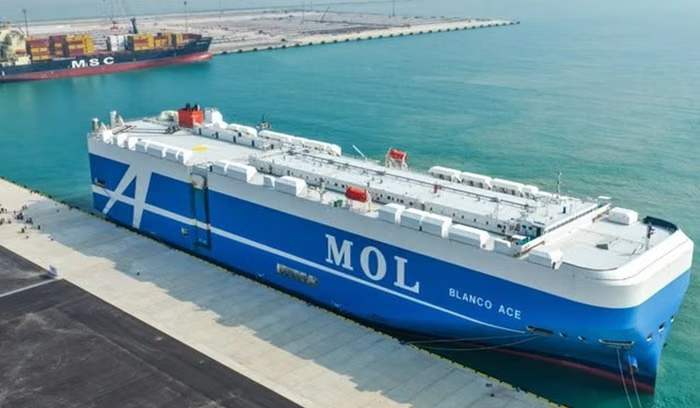
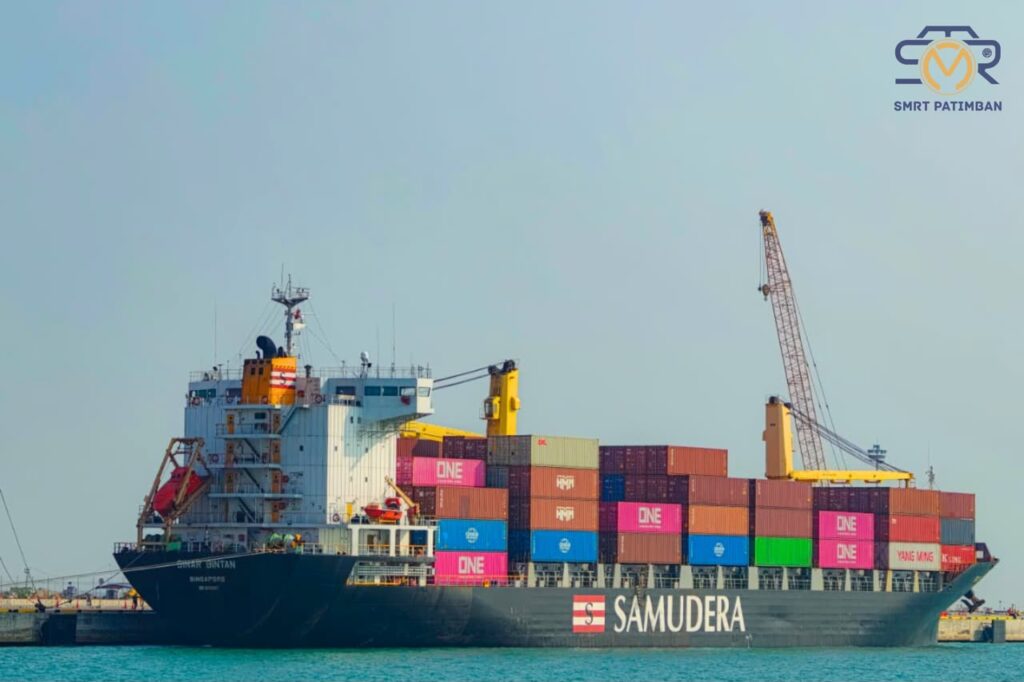
In Indonesia, the transportation and supply chain sectors continue to play a strategic role in national economic growth. Increased investment in port infrastructure, inter-island connectivity, logistics digitalization, and the development of maritime-based industrial areas is considered a foundation for strengthening national supply chain integration while enhancing Indonesia’s competitiveness in global markets.
According to Yukki, current global economic dynamics are increasingly shaped by supply chain disruptions, climate change, geopolitical tensions, and growing demands for sustainable business practices. These conditions are changing how investors and multinational companies determine investment locations and global distribution networks. He believes that, going forward, a country’s competitive advantage will no longer be determined solely by port capacity or the length of its transportation network, but also by its ability to provide logistics systems that are efficient, low-emission or sustainable, digitalized, and supported by regulatory certainty and sound governance.
“Global companies are increasingly paying attention to sustainability considerations in every investment decision. Modern infrastructure, efficient logistics processes, regulatory certainty, and a commitment to reducing emissions are becoming important elements in building global supply chains. Indonesia has a significant opportunity to leverage its maritime advantages as an added value in attracting investment,” Yukki emphasized.
Yukki explained that the implementation of the blue economy will create various new economic opportunities, ranging from the development of maritime technology and more environmentally friendly maritime transportation to green ports, ocean-based renewable energy, and the strengthening of coastal communities’ economies. This transformation is also expected to improve national logistics efficiency through intermodal integration, the utilization of digital technology, and the optimization of domestic distribution networks, which continue to face the challenge of high logistics costs due to Indonesia’s geography as an archipelagic nation.
According to him, the development of the maritime sector must ultimately be directed toward creating a balance between economic growth, environmental protection, and improved public welfare.
“Indonesia has all the prerequisites to become a global maritime power. What is needed now is stronger collaboration among the government, business community, associations, academia, and society in building a sustainable logistics and maritime ecosystem. The Blue Economy must become a foundation for development so that economic growth is more sustainable and of higher quality, while continuing to deliver benefits for future generations,” Yukki concluded.
The article has been published in Media Indonesia