Jakarta, June 24, 2026 – The resumption of maritime traffic through the Strait of Hormuz following a diplomatic agreement between the United States and Iran has provided a positive signal for global markets. Oil tankers, whose movements had nearly ground to a halt amid escalating geopolitical tensions, have begun sailing again, raising hopes for greater stability in global energy trade.
However, logistics and supply chain stakeholders caution that the return of shipping activity does not automatically signal the end of risks facing global supply chains.
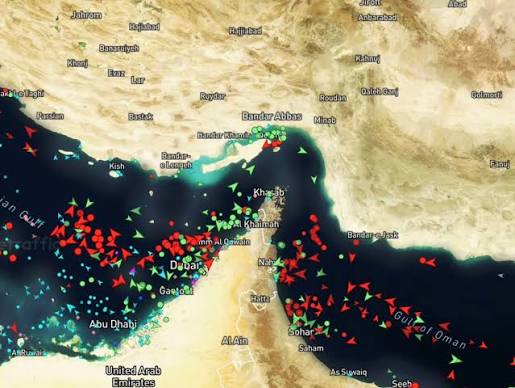
Under the memorandum of understanding signed in mid-June 2026, Iran agreed to allow commercial vessels to transit the Strait of Hormuz free of charge for 60 days. The closure of the strategic waterway since late February 2026 had left nearly 600 vessels and around 20,000 seafarers stranded in Gulf waters. The disruption affected approximately 20 percent of global oil trade, driving up logistics costs, insurance premiums, and international freight rates.
Yukki Nugrahawan Hanafi, Senior Vice President of the International Federation of Freight Forwarders Associations (FIATA) and Chairman of the Advisory Board of the Indonesian Logistics and Forwarders Association (ALFI), welcomed the reopening but urged businesses not to lower their guard.
“The resumption of shipping is certainly good news for the business community. However, we need to assess the situation more comprehensively. The challenge today is not merely the security of shipping lanes, but also the extensive damage to energy infrastructure caused by the conflict in the Middle East,” Yukki said.
The Strait of Hormuz remains one of the world’s most strategic maritime chokepoints, carrying roughly one-fifth of global oil trade and the majority of LNG exports from the Gulf region.
“For Asian economies, including Indonesia, stability in the Strait of Hormuz is directly linked to energy security, logistics costs, inflation, and industrial competitiveness,” he added.
At the height of the conflict, the impact was immediately reflected in soaring global oil prices, rising war-risk insurance premiums, shipping route diversions, and significantly higher transportation and logistics costs. Brent crude oil prices temporarily remained around US$106 per barrel during the crisis, although they have since retreated to approximately US$77 per barrel.
Yukki highlighted an often-overlooked issue: the differing pace of recovery between maritime transport and energy infrastructure.
“Unlike shipping lanes, which can reopen relatively quickly once security conditions improve, restoring energy infrastructure is a far more prolonged process. Oil refineries, export terminals, storage facilities, and LNG infrastructure require extensive repairs, fresh investment, and operational testing before they can return to full capacity,” he explained.
These concerns are supported by industry assessments. Energy research firm Rystad Energy estimates that damage to energy infrastructure across the Gulf could reach US$58 billion, while the International Energy Agency (IEA) reports that more than 40 oil and gas energy assets and facilities have been damaged. Many of these facilities are expected to require years to recover due to shortages of specialized equipment and skilled technical personnel.
“This means that although oil tankers have resumed sailing, global energy production and distribution capacity may not recover immediately. As a result, energy prices could remain volatile over the medium term, continuing to exert pressure on costs throughout global supply chains,” Yukki said.
For Indonesia, Yukki believes the latest developments should serve as a reminder to strengthen the resilience of its national logistics and supply chain system. Key priorities include accelerating industrialization and downstream processing, expanding domestic energy storage capacity, enhancing multimodal connectivity, and diversifying sources of energy and strategic raw materials.
“The Strait of Hormuz may be busy once again. But the most important lesson is not simply the return of tanker traffic. Rather, Indonesia must continue building stronger energy security, resilient infrastructure, and robust supply chains. Amid increasingly complex geopolitical uncertainty, a country’s ability to safeguard the continuity of its supply chains will become a defining factor of its future economic resilience and competitiveness,” Yukki concluded.
—
The original article can be accessed here